
A garage conversion transforms underused square footage into functional living space without the expense of a ground-up addition. Ontario homeowners are choosing this route more often as provincial rule changes simplify the permit process. Whether you want a rental unit, home office, or in-law suite, converting your garage delivers one of the strongest cost-to-value returns of any home renovation in the province.
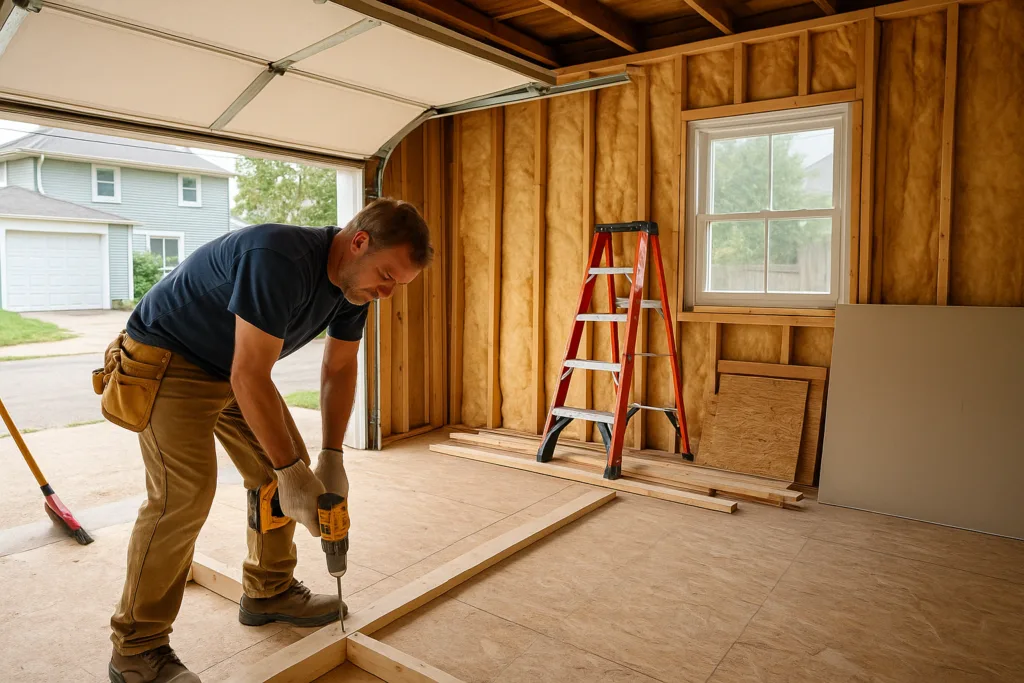
Why Convert a Garage in Ontario?
Building a new addition in the GTA runs $300 to $500 per square foot. A garage conversion cuts that figure dramatically because the foundation, walls, and roof already exist. Families use the converted space as a secondary suite for aging parents. Investors see rental income potential under Ontario’s updated dwelling unit rules. Even without tenants, a finished garage adds 10% to 20% to resale value in markets like Toronto and Hamilton.
Garage Conversion Cost in Ontario
Expect to spend between $40,000 and $90,000 for a full garage conversion. The cost of converting depends on several factors:
- Insulation type (spray foam vs. batt insulation)
- HVAC installation or heating and cooling extension from the main house
- Plumbing for a bathroom or kitchenette
- Drywall, flooring, and interior finishes
- Electrical upgrades to meet the current building code
Replacing the garage door with a framed, insulated wall adds $3,000 to $8,000. A simple home office with no water service might come in under $40,000. A full accessory dwelling unit with kitchen, bathroom, and separate entrance pushes past $80,000 in most municipalities.
Building Permit Requirements and Building Code
Every municipality in Ontario requires a building permit before you start framing or installing HVAC. Skip this step and you risk fines, forced demolition, or complications at resale.
A permit application typically includes:
- Permit drawings with the proposed floor plans and dimensions
- Zoning compliance details covering setbacks, lot coverage, and property line distances
- Fire separation and ventilation details for attached garages
The Ontario Building Code sets minimum standards for ceiling height, ventilation, fire safety, and heating and cooling. Your local building department reviews submissions against both provincial code and municipal bylaws. Approval timelines range from 4 to 8 weeks outside Toronto. Hire a designer or permit company that handles additional residential units to avoid delays from incomplete drawings.
Zoning and Bylaws That Affect Garage Conversions
Not every zone permits converting a garage into a living space. Before spending money on design, confirm your property’s zoning designation through the municipality’s online portal.
Key zoning factors to check:
- Whether your zone allows secondary suites or garden suites
- Parking space requirements, since converting removes covered parking
- Lot coverage maximums and property line setbacks
- Whether laneway access is required for detached structures
Toronto updated its bylaw framework in 2024 to support more conversions, including laneway suites. Burlington, Mississauga, and Ottawa have launched their own programs. Always verify local regulations before assuming one city’s rules apply elsewhere in the GTA.
Step-by-Step Garage Conversion Process
- Assess the existing garage. A contractor evaluates the foundation, walls, concrete floor, and roof. Attached garages share a wall with the main house, which simplifies HVAC but requires proper fire separation.
- Design and permit drawings. Create floor plans that meet building code and zoning requirements. Submit your permit application to the local building department.
- Rough-in work. Once building permits are approved, trades begin framing, electrical, plumbing, and ductwork. Insulation goes in after rough inspection.
- Finishes. Drywall, flooring, paint, doors and windows. If you are sealing the garage door opening, this happens during the framing stage.
- Final inspection. The building department confirms the new space meets safety standards and building regulations.
The full timeline runs 8 to 16 weeks with careful planning. Detached structures take longer because they often need independent utility connections.
Converting a Garage in Toronto and the GTA
Toronto’s housing supply pressure has made garage conversions especially popular. The City of Toronto supports converting these structures into rental housing as part of its accessory dwelling unit strategy.
Toronto-specific conditions include residential zoning, legal access via a public street or laneway, and alignment with the official plan. Outside Toronto, cities like Brampton and Markham maintain their own bylaw frameworks.
Does a Garage Conversion Add Value?
Yes. A professionally finished garage conversion adds livable space and assessed square footage. Appraisers factor the new living area into resale evaluations. The strongest returns come from projects with a separate entrance, bathroom, and kitchenette. These qualify as dwelling units under Ontario’s secondary suite provisions, making them attractive to investors seeking rental income.
Garage Conversion Ideas
Not every garage conversion needs to become a rental unit. Popular options include a home office with natural light, a home gym, or a guest bedroom with its own bathroom. Each option adds usable space and value to your home. Match the conversion type to your household needs and budget, then work with a contractor who understands local building regulations and what makes a secondary unit legal in Ontario.
Frequently Asked Questions
Is it legal to convert a garage into living space in Ontario?
Yes, provided you obtain a building permit and the finished space meets Ontario Building Code requirements for ceiling height, ventilation, fire safety, and egress.
Do I need permission from my municipality?
You need a building permit from your local building department. Starting work without one can result in stop-work orders and fines.
How much does a garage conversion cost?
Most projects fall between $40,000 and $90,000 depending on scope. A basic home office costs less than a full rental unit with plumbing.
How long does converting a garage take?
Plan for 8 to 16 weeks from permit approval to final inspection. The permit review itself adds 4 to 8 weeks.
What is the downside of a garage conversion?
You lose covered parking, and some municipal bylaws require replacement parking elsewhere on the lot. The renovation also demands careful planning around insulation, ventilation, and fire safety to meet the building code.
Can I rent out a converted garage in Ontario?
If the converted space meets Ontario’s secondary suite standards and your zoning allows rental units, yes. Many homeowners use the rental income to offset the cost of converting within a few years.